«If you raid the patriots’ wallets in their pockets it turns out they are Swiss,» says a vignette from El Roto, whose brief sentences and visual satire probably influenced Eugenio Merino‘s work more than any artist trained in the academy. Although the aesthetics of Merino, especially in his hyperrealist sculptures and kitsch metaphors, is peppered with by a more corrosive black humor, where heads can roll, where dictators are frozen and presidents undergo face washing […]
Categoría: Exhibitions
Semiotics of passions in CaixaForum Barcelona
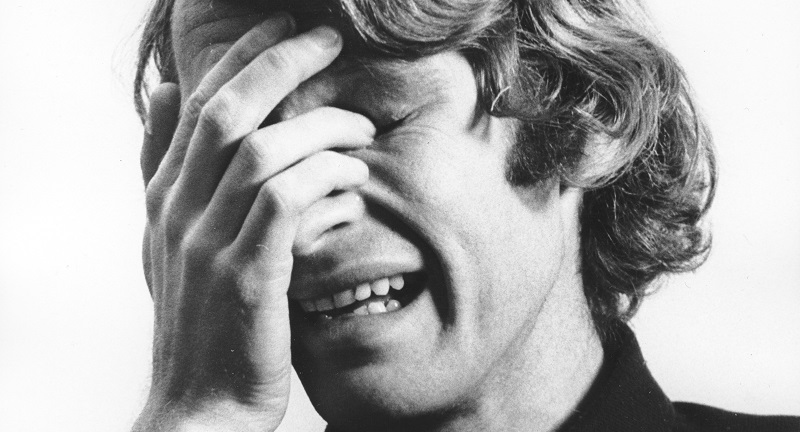
Darwin considered that letting out one’s emotions was something inappropriate for «civilized» men. Instead, crying was proper for weak personalities, that is, women with a hysterical tendency, senile old men and children, as well as «primitive» people. But, in spite of his andro and Eurocentric blindness, Darwin study of the phylogenetic transmission of behaviors and expressions influenced a thinker who would revolutionize the way of reading images and approaching the history of art, Aby Warburg. […]
Ornament and crime. Pyco-technic and avant-garde torture
When a subject carries such a devastating intensity as it was to turn modern art into a tool of torture, it is likely that any exposition about it will defraud us. But it can also happen that, as in Pedro G Romero‘s «Room», the playful lightening of the weight of History predisposes us to more flexible and audacious readings, freed from moral servitudes and invented truths. During the Spanish civil war, the checas were centers of detention […]
Rosell Meseguer, memories from underground
It is surprising the silence that reigned over the ruins. The lack of events is deceiving because in the basements there are still living fires, which move underground from one coal bunker to another Sebald, W. G. On the natural history of destruction As a child, Rosell Meseguer learned to listen to these fires buried under the cement of bunkers and forts, when she walked through underground galleries or tunnels of abandoned mines. The cavernous […]
Pilar Albarracín
There can be no a community without rites. There has never existed. Amid apelike howls, our ancestors performed already funerary offerings. Before worrying about building houses for the living, they already buried their dead. Shared symbolic thinking gives meaning to life, aiming to unite the people, to frighten the fear of emptiness by inventing a social order within natural chaos. It is an order that does not come from the law but from magic, it does not […]
When paintings left their frames
«A horrible and immense hole», exclaimed a journalist from Le Figaro seeing the desolate aspect of the Louvre wall where weeks before had hung The Mona Lisa. After the robbery, the visits to the museum increased in such a way that the newspapers satirized about it: «some people like works of art by themselves, others by the place they occupy», said a headline. The Italian carpenter who, one summer morning in 1911, removed La Gioconda […]
Undisciplined art in disciplinary architecture
During the 19th century, panoptic architecture applied to prisons became gradually widespread in Europe, prisons in which the feeling of being watched by the eye that sees all would implant a sort of censoring chip inside each prisoner. When Barcelona hosted the Universal Exhibition, in 1888, it closed basements and dungeons and also opened its model prison. It is said that at the beginning it was known as hotel entença (the street name) because it was […]
Cristina Toledo, hidden plots into the images
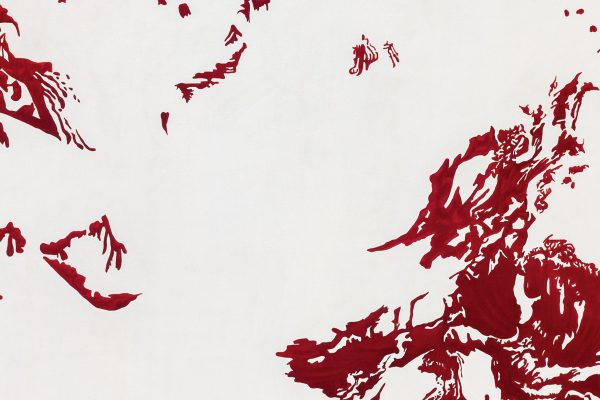
Historian Aby Warburg urged his contemporaries to read the images as symptoms, no longer as symbols or as signifiers. The symptomatic emerges when a choreographic substrate (gestures, emotions …) articulates unconscious relations between them. Today, in a world saturated with images without context or entity, transversal readings are even more necessary. Cristina Toledo, in her painting, strips the black and white surfaces of vintage photographs she finds on the internet, to rescue latencies captured in […]